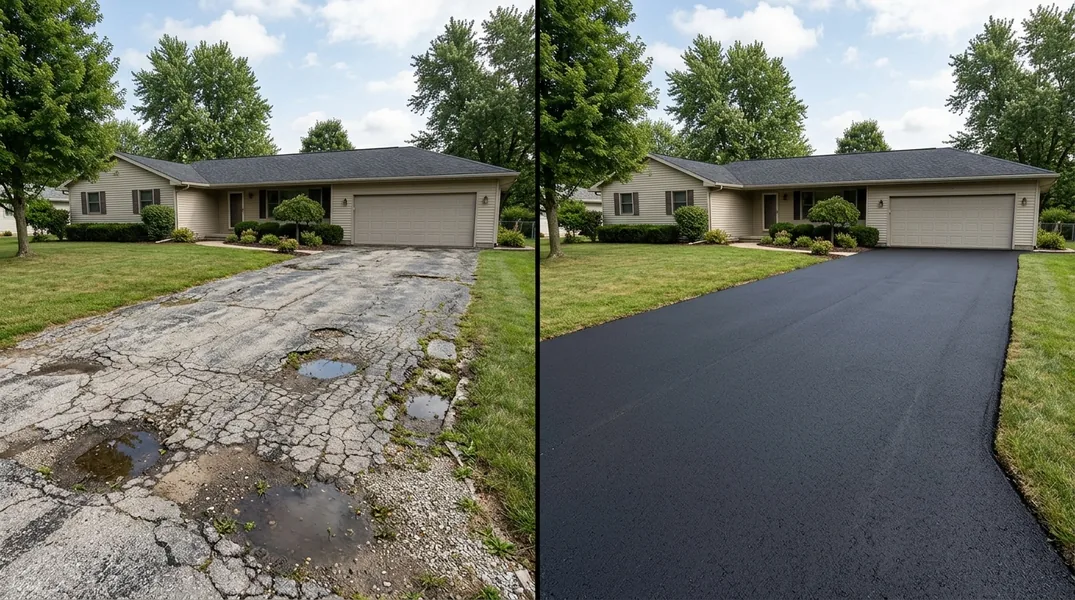
Asphalt vs Concrete Driveway: Understanding the Key Differences
When you're planning a new driveway in Muncie, the choice between asphalt and concrete is one of the most important decisions you'll make. Both materials have distinct advantages and drawbacks, and the right choice depends on your budget, climate, and long-term maintenance expectations. Understanding how these two materials perform differently, especially on the clay-heavy soil common throughout Indiana, will help you make an informed decision for your property.
Asphalt is a flexible, dark-colored material composed of bitumen and aggregate. Concrete, by contrast, is a rigid material made from cement, sand, and gravel. These fundamental differences in composition lead to very different performance characteristics, particularly in regions like Muncie where freeze-thaw cycles and moisture fluctuations are common. The flexibility of asphalt allows it to move slightly with ground shifts, while concrete's rigidity can lead to cracking when the soil beneath it expands and contracts with seasonal changes.
Asphalt Driveway Lifespan: How Long Will It Last on Clay Soil?
The Asphalt Driveway Paving & Installation industry generally cites a lifespan of 15 to 20 years for a properly installed and maintained asphalt driveway. However, in Muncie, where clay soil is prevalent, the actual lifespan can vary based on how well the base is prepared and how diligently you maintain the surface. With proper care, including regular seal coating and prompt Driveway Repair, many asphalt driveways in the area have lasted 20 to 25 years or longer.
Clay soil presents unique challenges because it expands when wet and contracts when dry, creating movement beneath the driveway surface. A well-constructed asphalt driveway with a solid gravel or recycled asphalt base can accommodate this movement better than concrete. The key to extending your asphalt driveway's lifespan is addressing small issues before they become major problems. Seal coating every two to three years protects the asphalt from water penetration and UV damage, while filling small cracks and addressing potholes promptly prevents water from reaching the base layer and causing further deterioration.
Concrete Driveway Lifespan: Performance on Indiana Clay
Concrete driveways are often marketed as lasting 25 to 40 years or more, which is longer than asphalt in theory. However, this advantage diminishes significantly when concrete is installed on clay soil in regions with freeze-thaw cycles like Indiana. The expansion and contraction of clay soil beneath a concrete slab places tremendous stress on the rigid surface, leading to cracking, heaving, and spalling far sooner than expected.
In Muncie, homeowners often find that concrete driveways develop cracks within 5 to 10 years due to soil movement, especially if proper base preparation and drainage weren't addressed during installation. Once concrete cracks, water infiltrates the base, accelerating deterioration. Unlike asphalt, concrete repairs are often visible and expensive, and repairing large sections typically means replacing the entire slab. While concrete requires less frequent seal coating than asphalt, the cost of addressing structural problems often exceeds the savings gained from reduced maintenance.
Asphalt Over Concrete Driveway: Is It a Good Option?
One question many homeowners in Muncie ask is whether they can simply pave asphalt over an existing concrete driveway. The answer is yes, but with important caveats. Asphalt Resurfacing & Overlay is a cost-effective solution for covering old or damaged concrete, and it can extend the life of your driveway without the expense of complete removal and replacement.
However, asphalt over concrete works best when the concrete is in relatively good condition with only minor cracks. If the concrete has significant structural damage, heaving, or large cracks, the asphalt overlay will eventually reflect those problems as it settles and shifts with the concrete beneath it. A professional assessment is essential before committing to this approach. The asphalt layer typically lasts 10 to 15 years over concrete, depending on traffic, climate, and maintenance. If you're considering this option, contact Muncie Asphalt Paving at (765) 587-3573 for a professional evaluation of your existing concrete surface.
Blacktop Driveway Maintenance: Protecting Your Investment
A blacktop driveway requires more frequent maintenance than concrete, but the maintenance is typically less expensive and easier to perform. Seal coating is the most important maintenance task for a blacktop driveway, as it protects the asphalt from water, UV rays, and oxidation. In the Muncie climate, seal coating should be applied every two to three years to maintain optimal protection. Additionally, small cracks should be filled promptly to prevent water from penetrating the base layer, and Pothole Repair & Asphalt Patching should be addressed as soon as potholes appear.
Concrete driveways, while requiring less frequent seal coating, present different maintenance challenges. Concrete sealers protect against staining and water penetration, but they degrade over time and must be reapplied every 2 to 3 years as well. Concrete is also prone to salt damage in winter, which accelerates deterioration in freeze-thaw environments. Crack repair in concrete is more complex and expensive than in asphalt, and once structural damage occurs, the only solution is often complete replacement. When you factor in the total cost of ownership, asphalt's lower maintenance expenses and easier repair process often make it the more economical choice over the long term.
Asphalt Driveway Paving & Installation Cost in Muncie: What to Budget
The pricing for a new asphalt driveway typically ranges from $3 to $5 per square foot, depending on the size of the project, the condition of the base, and current material costs. A standard two-car driveway (approximately 500 square feet) might cost between $1,500 and $2,500. Concrete, by contrast, generally costs $6 to $10 per square foot, making a comparable concrete driveway significantly more expensive upfront. However, the initial cost difference is only part of the equation.
When calculating total cost of ownership over 20 years, asphalt's lower installation cost combined with manageable maintenance expenses often results in lower overall spending than concrete. A blacktop driveway with regular seal coating and timely repairs may cost less in total than a concrete driveway that requires expensive structural repairs or full replacement. For an accurate estimate tailored to your specific property and soil conditions in Muncie, contact Muncie Asphalt Paving for a free estimate. Our team can assess your site, discuss your options, and provide transparent pricing for your project.
Making Your Decision: Asphalt or Concrete for Muncie Clay Soil
For homeowners in Muncie with clay soil, asphalt emerges as the superior choice in most situations. Its flexibility accommodates soil movement, its lower cost makes it more accessible, and its maintenance requirements, while regular, are straightforward and affordable. The asphalt driveway lifespan of 15 to 20 years, often extended to 25 years with diligent care, provides excellent value and peace of mind.
Concrete may appeal to those seeking minimal maintenance and a longer theoretical lifespan, but the reality in Indiana's climate is that concrete on clay soil often underperforms its promised longevity. Cracks develop earlier, repairs become expensive, and eventually, replacement becomes necessary. If you're ready to invest in a durable, cost-effective driveway solution, Muncie Asphalt Paving is here to help. Call us at (765) 587-3573 or request a free estimate today to discuss your driveway project and learn why asphalt is the smart choice for Muncie properties.
Looking for a professional asphalt paving contractor in Muncie? Muncie Asphalt Paving responds fast for all your asphalt paving needs.
Get a Free Quote