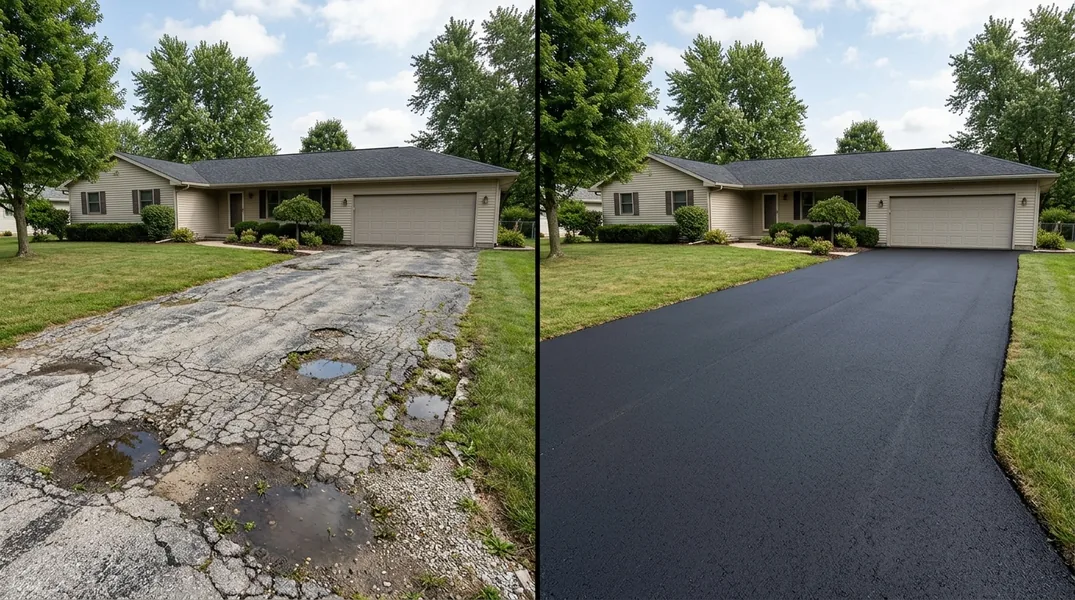
Signs Your Driveway Needs Attention
Your driveway is one of the first things visitors notice about your home, and it takes a beating from weather, traffic, and time. In Muncie, where winters bring freeze-thaw cycles and summers bring intense sun exposure, driveways face unique challenges. Knowing when to act can save you thousands of dollars in the long run.
Common warning signs include cracks that are wider than a quarter inch, potholes, fading color, and areas where the surface feels soft or spongy underfoot. If you notice water pooling on your driveway after rain, that's another red flag. Small issues like these often indicate that your asphalt is losing its structural integrity. The good news is that many of these problems can be addressed early with Driveway Repair services before they become major expenses. However, if damage is extensive or your driveway is more than 15 to 20 years old, replacement may be the more cost-effective choice.
When Repair Makes Sense
Driveway Repair is typically the right choice when damage is localized and your driveway still has several years of life left. If you have a few scattered cracks, isolated potholes, or minor surface deterioration, targeted repairs can extend your driveway's lifespan significantly. Pothole Repair & Asphalt Patching is one of the most common solutions, addressing those frustrating holes that seem to appear overnight after heavy rain.
Another excellent repair option for Muncie homeowners is Asphalt Resurfacing & Overlay, which applies a fresh layer of asphalt over your existing driveway. This approach is ideal if your base is still solid but the top layer is showing wear. Resurfacing costs less than a full replacement and can give your driveway another 7 to 10 years of service. Most homeowners find that repairs are worthwhile when the total cost is less than 50 percent of what a full replacement would run.
When Replacement Is the Better Investment
If your driveway shows multiple problem areas, extensive cracking (especially alligator cracking that resembles a spider web), or has been in place for 20 years or more, replacement is likely your best option. A full Asphalt Driveway Paving & Installation project gives you a fresh start with a clean, smooth surface and a fresh warranty. New driveways also improve your home's curb appeal and can even increase property value.
The decision becomes clearer when you consider long-term costs. Repeatedly repairing an aging driveway means ongoing maintenance expenses, inconvenience, and the frustration of recurring problems. A new driveway, by contrast, requires minimal maintenance for the first few years. Plus, when you invest in a quality new installation, you're making a decision that will pay dividends for the next 15 to 20 years. If you're unsure whether your situation calls for repair or replacement, the team at Muncie Asphalt Paving can assess your driveway and provide honest guidance tailored to your specific needs.
How Long for Asphalt to Cure: What Homeowners Need to Know
One of the most common questions we hear is about curing time for new asphalt. Understanding how long for asphalt to cure is essential for protecting your investment and planning your driveway use. The answer isn't quite as simple as a single number, because asphalt curing happens in stages, and several factors influence the timeline.
Newly installed asphalt begins to harden within 24 to 48 hours under normal weather conditions, but this is just the initial set. The surface may feel firm enough to walk on, but it's still vulnerable. Full curing typically takes 6 to 12 months, during which the asphalt continues to compact and bond with the base layer. During the first few weeks, heat from the sun and traffic gradually harden the material. Temperature and humidity play major roles, so curing happens faster on warm, dry days and slower during cool or wet periods. In Muncie's variable climate, you may experience a longer cure time during spring or fall compared to summer months.
How Long Before You Can Drive on New Asphalt
The question of how long before you can drive on new asphalt is one that every homeowner wants answered immediately after installation. The short answer is that light traffic can typically resume after 24 to 48 hours, but there are important caveats. During the first week, it's best to avoid heavy vehicles, sharp turns, and parking in the same spot repeatedly, as these actions can cause impressions or disturbance in the still-softening surface.
For the first month, treat your new driveway gently. Avoid backing up or making sharp turns, and don't park heavy vehicles like RVs, trailers, or construction equipment on it. During hot weather, asphalt is more pliable, so extreme caution is especially important on warm days. It's also wise to keep your new driveway free of debris and avoid using it as a work surface. If you must use the driveway during the cure period, drive slowly and straight whenever possible. After 7 to 10 days of normal light use, your driveway will be substantially harder, though full strength won't be reached for several months.
New Asphalt Driveway Care: Protecting Your Investment
Once your new driveway is installed, new asphalt driveway care becomes your responsibility. Proper maintenance during the first year and beyond will significantly extend your driveway's lifespan and keep it looking great. The first step is to avoid placing heavy items on the driveway during the first month. Don't set up construction equipment, park heavy vehicles, or allow contractors to stage materials on your new surface.
Keeping your driveway clean is the next essential step. Sweep debris regularly and rinse away dirt and dust with a garden hose. Avoid using harsh chemicals or pressure washers during the first year, as these can damage the surface before it's fully cured. Seal coating is one of the most important maintenance tasks you can perform. Most experts recommend applying a seal coat 6 to 12 months after installation, which creates a protective barrier against UV rays, water infiltration, and oxidation. This simple step can add years to your driveway's life and maintain its rich, dark appearance.
How Often to Seal Driveway: A Maintenance Schedule for Muncie Homeowners
Understanding how often to seal driveway surfaces is key to long-term protection and cost savings. The general recommendation is to seal your asphalt driveway every 2 to 3 years, though this can vary based on weather exposure, traffic volume, and the quality of the original installation. In Muncie, where winter weather and UV exposure can be harsh, you might lean toward the more frequent end of that schedule.
To determine if your driveway needs resealing, look for fading color or areas where water no longer beads up on the surface. These signs indicate that the seal coat has worn away and your asphalt is becoming vulnerable. Regular seal coating is far less expensive than repairs or resurfacing, making it one of the smartest investments you can make. A professional seal coat application typically costs a fraction of what major repairs would run, and it protects against cracks, potholes, and water damage. If you're not sure whether your driveway is due for sealing, the experts at Muncie Asphalt Paving can evaluate your surface and recommend a maintenance schedule tailored to your specific situation.
Asphalt Driveway Paving & Installation Cost in Muncie: What to Budget
When you're deciding between repair and replacement, cost is naturally a major factor. The pricing for Asphalt Driveway Paving & Installation varies based on the size of your driveway, site conditions, and the scope of work required. A new driveway typically costs between $3 and $6 per square foot for basic installation, though this can increase if your site requires significant preparation or if you choose premium materials. For a standard two-car driveway of about 500 to 600 square feet, you should budget between $1,500 and $3,500 for a complete installation.
Repairs and resurfacing are generally less expensive than full replacement. Pothole Repair & Asphalt Patching might run $100 to $500 per pothole, depending on size and location, while Asphalt Resurfacing & Overlay typically costs $1.50 to $3 per square foot. To get an accurate estimate for your specific situation, contact Muncie Asphalt Paving at (765) 587-3573 or request a free estimate online. Our team will evaluate your driveway and provide transparent pricing so you can make an informed decision.
Making Your Decision: Repair or Replace
Deciding whether to repair or replace your driveway ultimately depends on several factors: the extent of damage, the age of your driveway, your budget, and your long-term plans for your home. If your driveway is relatively young with only minor damage, repair is usually the smart choice. If it's old, heavily damaged, or showing signs of base failure, replacement offers better value over time. A professional assessment can help clarify the best path forward for your situation.
The team at Muncie Asphalt Paving has helped hundreds of homeowners make this decision. We provide honest evaluations without pressure, focusing on what's best for your home and your budget. Whether you need Driveway Repair, Asphalt Resurfacing & Overlay, or a complete new Asphalt Driveway Paving & Installation, we have the expertise and experience to deliver quality results. Contact us today at (765) 587-3573 or visit our website to schedule your free estimate. Let's get your driveway back in great shape.
Looking for a professional asphalt paving contractor in Muncie? Muncie Asphalt Paving responds fast for all your asphalt paving needs.
Get a Free Quote