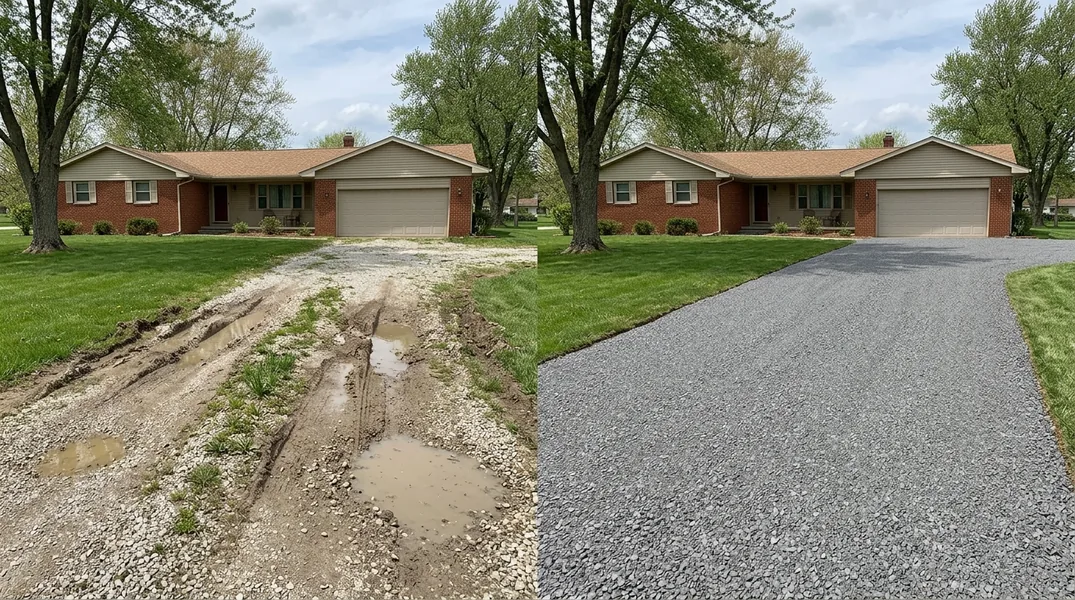
Understanding Muncie's Unique Soil Challenge
If you own a home in Muncie, you've probably noticed that driveways don't last as long here as they do in other parts of Indiana. The culprit isn't just age or heavy traffic. It's the soil beneath your asphalt. Muncie sits in a region dominated by clay till soil, a dense, poorly draining mixture left behind by glaciers thousands of years ago. This soil type creates a perfect storm for asphalt damage because it traps water and expands when frozen.
Clay till holds moisture like a sponge and doesn't allow water to drain away quickly. When rain falls on or around your driveway, that water seeps down into the base layers and gets trapped in the clay. During winter, when temperatures drop below freezing, that trapped water turns to ice, and the clay expands upward. This expansion pushes against your asphalt from below, cracking and buckling the surface. Come spring, the ice melts, the clay settles unevenly, and you're left with a damaged driveway. This cycle repeats year after year, making Muncie driveways particularly vulnerable to premature failure.
How Frost Heave Damages Your Asphalt Driveway
Frost heave is the technical term for what happens when soil expands due to freezing water. In regions with clay till soil like ours, frost heave is one of the leading causes of driveway damage. The process begins innocuously enough. Water from rain, snow melt, or poor drainage collects in the soil beneath your driveway. As temperatures drop in late fall and winter, that water freezes and expands, pushing upward with surprising force. A single freeze-thaw cycle might lift your driveway by a quarter inch or more. Over a winter season with multiple freeze-thaw events, the cumulative movement can shift your asphalt by several inches.
This constant movement creates stress on the asphalt layer above. The material is designed to flex somewhat, but repeated heaving and settling exceeds its tolerance. Cracks form, and once cracks appear, water infiltrates deeper into the base and subgrade. This accelerates the damage cycle. You'll notice ripples, waves, or buckled sections appearing in your driveway surface, especially near the edges where drainage is poorest. Without intervention, frost heave damage progresses quickly from minor cosmetic issues to structural failure. That's why Driveway Repair in frost-prone areas requires addressing the root cause: water management and proper base preparation.
Pothole Repair and Asphalt Patching: Temporary Versus Long-Term Solutions
When frost heave and poor drainage damage your driveway, the first visible signs are usually potholes and surface cracks. Many homeowners reach for quick fixes like Pothole Repair & Asphalt Patching, which can temporarily restore functionality. Patching involves cleaning out the damaged area, applying a tack coat, and filling it with new asphalt or cold patch material. For small, isolated damage, this approach works reasonably well and costs far less than a full replacement.
However, patching is not a cure-all, especially in Muncie where the underlying soil problem persists. If your driveway develops potholes because of frost heave and poor drainage, patching the holes treats the symptom, not the disease. The same frost heave conditions that created the first pothole will continue to damage the surrounding asphalt and eventually the patch itself. Many homeowners find themselves patching the same driveway repeatedly over several seasons, spending hundreds of dollars on temporary fixes before accepting that a more comprehensive solution is needed. That said, Pothole Repair & Asphalt Patching remains a smart choice for new damage or for buying time while you plan a larger repair project.
Repair or Replace Asphalt Driveway: Making the Right Choice for Your Home
The decision between repairing and replacing your driveway depends on the extent of damage, the age of your current asphalt, and your budget. If your driveway is relatively young (under 8 to 10 years old) and damage is limited to a few small areas, repair makes sense. Asphalt Resurfacing & Overlay is another middle-ground option that can extend the life of a moderately damaged driveway by 7 to 10 years at a cost significantly less than full replacement.
However, if your driveway shows widespread cracking, multiple potholes, significant heaving, or is more than 15 years old, replacement becomes the more economical choice. A new driveway with proper grading, drainage improvements, and a quality base layer will outlast repeated patch jobs. The key is addressing the soil and drainage issues that caused the original failure. This might mean installing better edge drains, improving grading to shed water away from the driveway, or adding a thicker, more robust base layer designed for clay till conditions. When you invest in Asphalt Driveway Paving & Installation that accounts for local soil challenges, you're building a driveway that will perform better and last longer in the Muncie climate.
The Importance of Professional Drainage and Base Preparation
One reason why some driveways fail quickly while others last decades is the quality of what lies beneath the asphalt. The base layer and drainage system are just as important as the asphalt surface itself. In areas with clay till soil, proper base preparation is non-negotiable. A professional installation includes compacted stone or gravel base, often 4 to 6 inches thick, that provides structural support and allows some water drainage. The driveway should also be graded slightly so that water runs off to the sides rather than pooling or soaking straight down.
Many DIY or budget-conscious installations skip these crucial steps, leading to premature failure. When you work with an experienced contractor who understands local soil conditions, they'll design your driveway to handle the specific challenges of clay till. This might include thicker base layers, edge drains, or special permeable base materials that allow water to escape sideways rather than accumulating underneath. The upfront investment in proper installation pays dividends over the life of your driveway. If you're considering a new driveway or major repairs, it's worth getting a free estimate from a local contractor who can evaluate your site's drainage and soil conditions.
Why Professional Installation Matters in Muncie: Protecting Your Investment
Choosing to install or repair your driveway with a professional contractor versus attempting DIY solutions or hiring inexperienced installers can mean the difference between a driveway that lasts 20 years and one that fails in 5. Local contractors understand the unique challenges of clay till soil, seasonal freeze-thaw cycles, and drainage requirements specific to the Muncie area. They know which base preparations work best, how to grade for proper drainage, and how to compact asphalt correctly in local weather conditions.
Professional installation also comes with warranties and guarantees that protect your investment. If problems arise within a specified period, the contractor is responsible for repairs. This accountability ensures quality work. Additionally, professionals have the right equipment and experience to complete the job efficiently and to specifications. When you're ready to move forward with driveway work, contact Muncie Asphalt Paving at (765) 587-3573 or visit our website to discuss your specific situation. We can help you understand whether your driveway needs patching, resurfacing, or replacement, and we'll design a solution that addresses the underlying soil and drainage challenges that make clay till regions unique.
Looking for a professional asphalt paving contractor in Muncie? Muncie Asphalt Paving responds fast for all your asphalt paving needs.
Get a Free Quote